
Smart Ways to Handle Storm Damage at Home
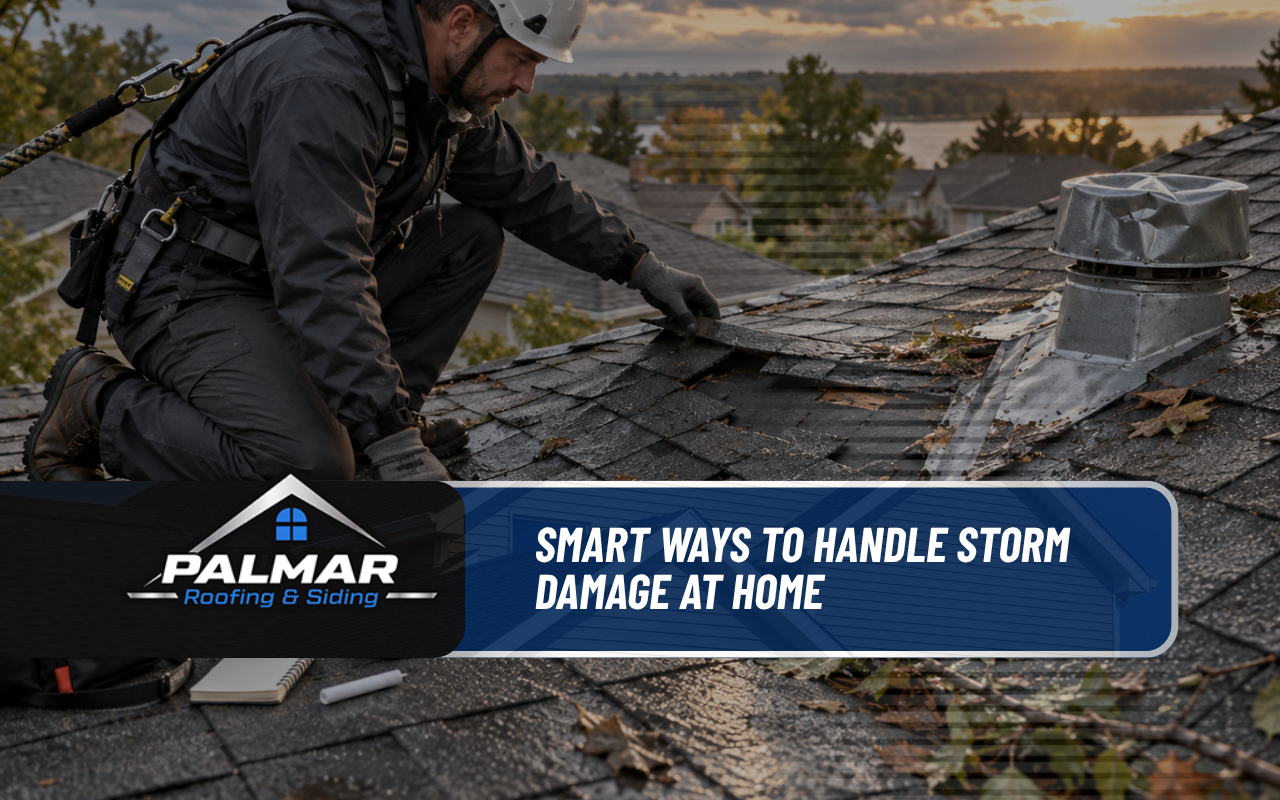
Storm damage can leave your home exposed to leaks, broken materials, and safety risks. Heavy rain, strong winds, and flying debris may affect the roof, siding, windows, and other areas. Knowing what to check first can help you respond calmly and prevent small problems from getting worse.
At Palmar Roofing & Siding, we believe preparation makes recovery easier. Our team helps homeowners understand visible problems, protect vulnerable areas, and plan the next steps. With a clear approach, you can respond to storm damage while keeping your family and property safer.
Start With A Safe Property Damage Inspection
Begin by checking your home from a safe distance. Look at the roofline, gutters, siding, windows, and doors for visible signs of damage. Missing materials, loose panels, broken glass, or damaged shingles may show where the storm caused the most impact.
Next, check inside for wet ceilings, wall stains, or water intrusion. Avoid climbing onto the roof after severe weather because surfaces may be slippery or unstable. Instead, record what you can see from the ground and save photos for future repair discussions.
- Check gutters, siding, windows, and visible roof areas.
- Photograph loose materials, leaks, and fallen debris.
- Stay away from damaged wires or unstable structures.
Protect Exposed Areas Before Problems Become Worse
Once you identify storm damage, protect exposed areas when it is safe to do so. Small openings can allow more rain inside, while loose materials may create additional problems during another period of strong wind. Temporary protection can help reduce further damage until repairs begin.
Move furniture and personal items away from wet areas. Place containers under minor leaks and avoid rooms with damaged ceilings. For roofing concerns, our Springfield roof repair services can help homeowners address visible roofing damage with a professional inspection.
Recognize Common Signs Of Serious Roof Damage
Roof damage is not always easy to see from the ground. After a storm, look for missing shingles, bent flashing, loose gutters, or pieces of roofing material around the yard. These signs may point to problems that need closer attention.
Wind damage can also lift shingles without removing them completely. This may weaken the roof and allow moisture underneath. At Palmar Roofing & Siding, we recommend having suspicious areas checked before another storm brings more rain or stronger winds.
- Missing, cracked, curled, or damaged shingles.
- Loose flashing near chimneys, vents, or roof edges.
- Water stains appearing on ceilings or attic surfaces.
Control Water Intrusion And Limit Interior Damage
Water intrusion can spread quickly through ceilings, insulation, walls, and floors. If you notice a leak, move valuable items away and collect dripping water when possible. Fans may help dry lightly damp spaces, but large wet areas often need professional attention.
Do not ignore small stains after a storm. Moisture may travel away from the original roof opening before becoming visible indoors. Homeowners near Eugene can review our Eugene roof repair options when leaks or roofing damage need further evaluation.
Document Property Damage For Clear Repair Planning
Good records make storm damage easier to explain to contractors and insurance representatives. Take clear photos of affected areas before moving debris or making temporary changes, unless immediate action is needed for safety. Wide photos and close views can provide useful context.
Create a simple written record with the location and type of damage. Include roof damage, broken siding, damaged shingles, and interior leaks. Keep receipts for temporary materials or emergency work because these records may support later conversations about repairs or insurance coverage.
- Take clear photos from several safe angles.
- Write down where each problem appears.
- Save repair records, receipts, and inspection notes.
Select Professional Repairs For Lasting Home Protection
Temporary fixes can reduce immediate risk, but they are not a replacement for proper repairs. A roofing professional can check hidden areas, identify weak materials, and explain whether a targeted repair or broader solution makes sense for your home.
At Palmar Roofing & Siding, we focus on clear guidance and practical repair planning. Homeowners near Corvallis can also visit our Corvallis roof repair page for more information about local roofing support after severe weather.
Frequently Asked Questions
Build Better Protection Before The Next Severe Storm
Recovery is also a good time to prepare for future weather. Keep gutters clear, trim weak branches, inspect roofing materials, and watch for early signs of wear. Regular maintenance can reduce the chance that small weaknesses become serious storm damage later.
At Palmar Roofing & Siding, we want homeowners to feel prepared before and after severe weather. By acting early, documenting problems, and choosing proper repairs, you can protect your home and reduce the stress that often follows a major storm.