
Essential Roofing Safety Guidelines for Working on Roofs
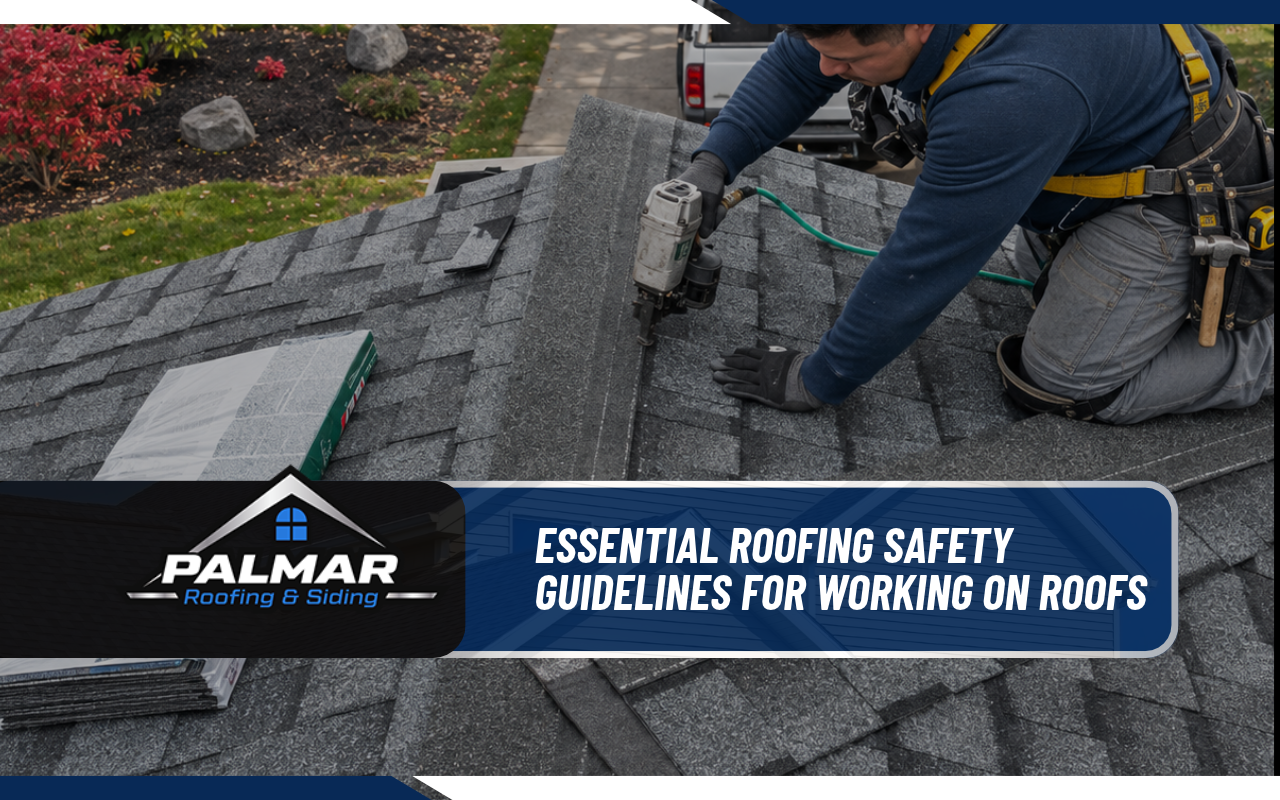
Working on a roof brings risks that are easy to miss. Slippery shingles, sudden wind, and unprotected edges can turn a simple task into an emergency. Good roofing safety starts with planning and knowing when to stay off the roof.
At Palmar Roofing & Siding, we believe clear information helps you make safer choices about roof care. These guidelines explain common hazards and why trained help matters.
Safe Roofing Practices Matter Before Work Begins
A fall can cause serious injury, even during a short task. Roof safety protects people on the roof and those walking below. Before work begins, assess roof conditions, power lines, and falling objects.
Preparation also limits dropped tools and property damage. Our roofing and exterior services page explains the kinds of roof repairs, replacements, and inspections you can discuss with our team. Even quick visits carry risks. Make sure people below know about work overhead, and keep children and pets away from areas where materials might fall.
Common Roofing Hazards That Deserve Your Full Attention
Roofing hazards may change during the day, making roofing safety checks important. A dry surface can become slippery, while loose materials may shift underfoot. Look for warning signs from a safe position. Avoid weak areas.
- Wet shingles, moss, ice, and loose debris can reduce grip.
- Open edges, skylights, and damaged decking create fall risks.
- Overhead wires and unsecured tools add electrical and impact hazards.
If you spot these issues, keep others away and arrange an inspection.
Protective Gear Helps Reduce Risks While Working Above
Proper roofing equipment must suit the task and be checked before use. Protective gear cannot make an unsafe roof safe. Fall protection requires correct equipment, suitable anchor points, training, and a plan for rescue if someone falls.
- Wear footwear with reliable grip and appropriate head and eye protection.
- Check harnesses, connectors, and lines for damage before use.
- Use guardrails or approved fall arrest systems where required.
Never attach a harness to an unverified anchor. A professional roofer should understand which protective system fits the work and applicable safety rules.
Roof Checks Help Identify Problems Before Anyone Climbs
Missing shingles, sagging areas, and loose flashing may signal damage. Ground-level photos help describe concerns without climbing.
At Palmar Roofing & Siding, we can discuss roof inspection options and visible concerns with you. Our Eugene roofing company page offers local service information. Avoid walking on suspect decking or near skylights; both may fail under weight.
Ladders, Weather, and Worksite Order All Affect Safety
Safe access and changing weather deserve as much attention as conditions on the roof. An extension ladder used for roof access generally needs stable footing, proper angle, and side rails extending three feet above the landing. Scaffold platforms also need correct setup and protective features.
- Inspect ladders and platforms before use; keep access routes clear.
- Stop roof activity when rain, ice, strong wind, or lightning makes conditions unsafe.
- Keep tools secured and debris away from walkways and edges.
Heat and cold affect concentration. Postpone work if conditions worsen. Never use a gutter as a secure ladder support.
Training and Emergency Planning Support Safer Roofing Decisions
Roof work requires training in hazard recognition and emergency response. Workers should know how to communicate, keep bystanders clear, and respond if someone falls. A roofing safety rescue plan matters because someone hanging in a harness needs prompt help.
For your own property, keep emergency access open and avoid standing below active roof work. You can read more about our approach to exterior projects on our homepage. Roofing safety includes knowing when to call trained workers.
Frequently Asked Questions
Make Safer Choices Before Starting Your Roofing Project
Good roofing safety is not a single tool or checklist. It comes from noticing hazards, planning access, using proper protection, and respecting changing conditions. If your roof needs attention, avoid climbing just to confirm a problem that could be assessed more safely.
At Palmar Roofing & Siding, we welcome your questions about roof repairs and inspections. You can share your roof concerns with us so we can discuss possible next steps. Safety comes before speed. When a concern is beyond your ability to assess safely, leave the roof alone and describe what you see from the ground.